


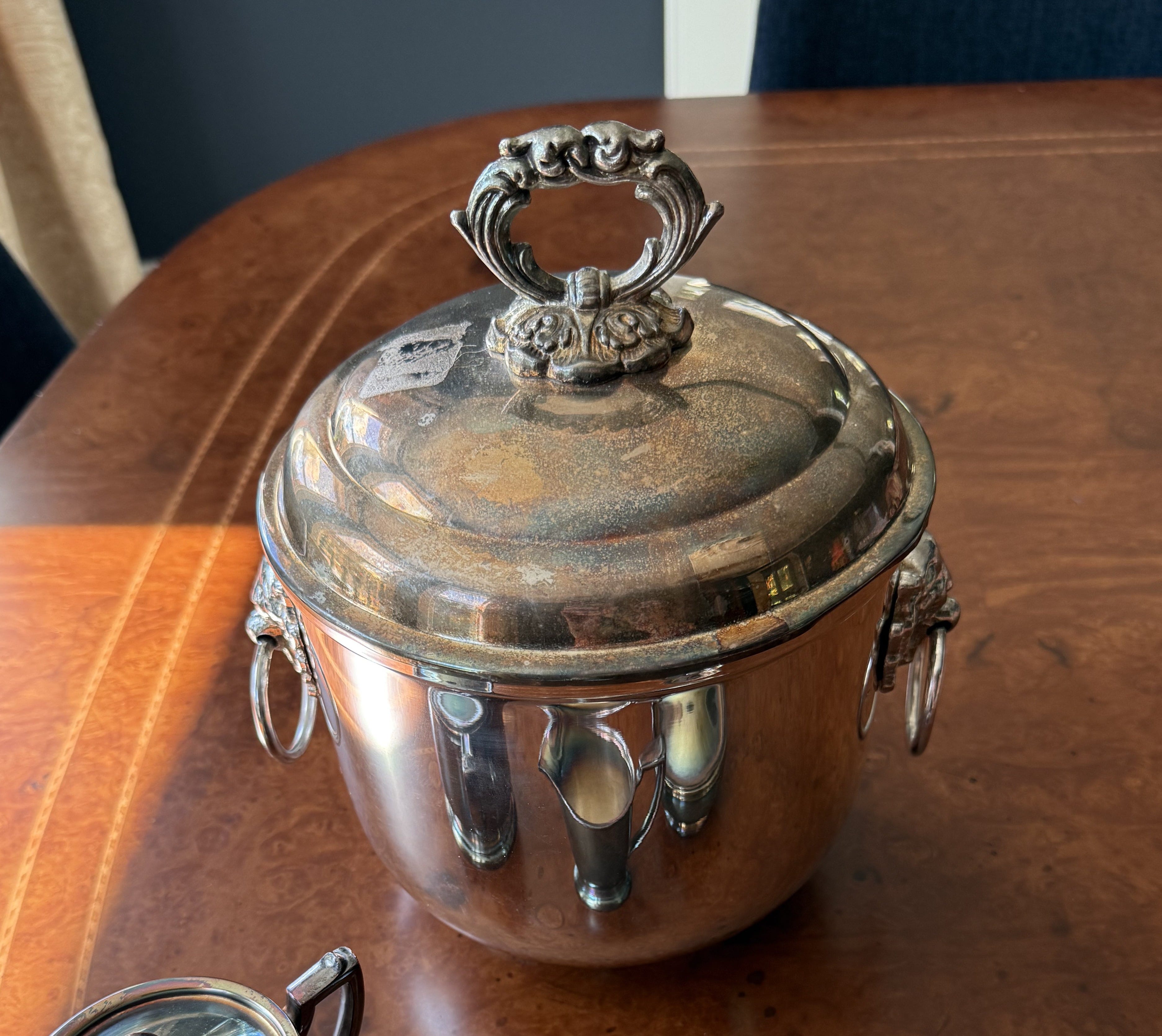
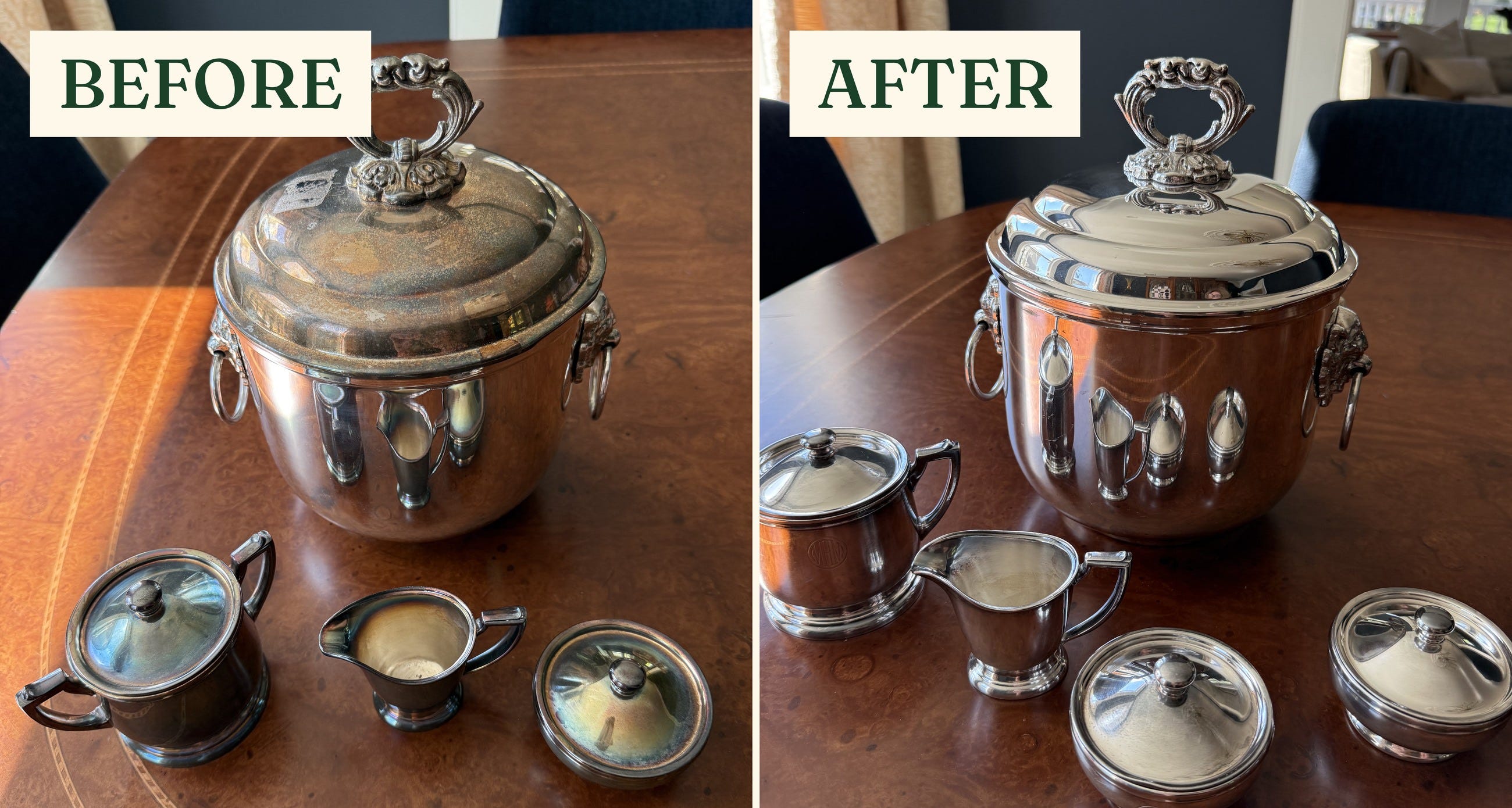
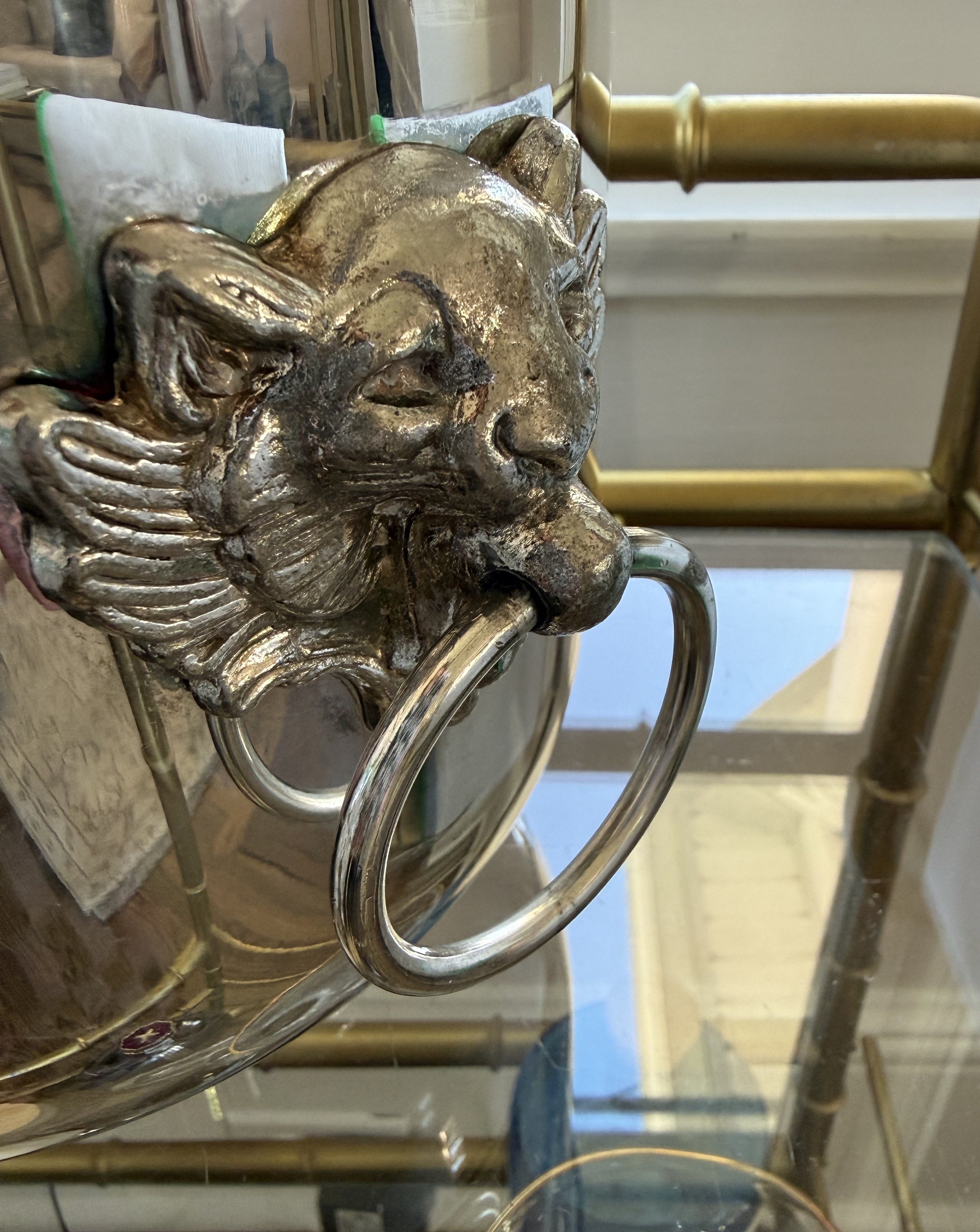
I learned years ago that nothing beats the patina of old silver pieces sprinkled throughout your home. Recently I walked by an old ice bucket at an estate sale. It was brown. Not tarnished-looking-vintage brown — properly brown, the color of an old penny. But I stopped to pick it up because I liked the lion-head handle details. It had some sticker residue on the side and more on the lid, and I wondered if the patina overall was salvageable. But I loved the shape of it and I love a $30 challenge.
In the end it took minutes. Not an afternoon, not a weekend — a few minutes a piece. It isn’t a restoration project and you don’t need to send it anywhere or be super crafty yourself. All you need is a jar of cream, a soft cloth and some elbow grease.
So pull up a chair. I’ll put the kettle on.
First, flip it over
Before you purchase or clean anything, look at the bottom of it. That usually tells you more about the piece than anything else.
If it says sterling or 925, it’s solid silver all the way through. Almost nothing you find at an estate sale will say that. Everything else is silver-plated — a layer of silver electroplated over a base metal like copper or brass, and that layer is thinner than a sheet of paper. Hotel and institutional pieces often say silver soldered, which sounds like it means solid silver and does not; it refers to the harder alloy used on the seams. Those are the pieces I hunt for, because they were built to be used three times a day for forty years and they were plated accordingly.
My ice bucket says English Silver Mfg. Corp., Made in U.S.A. Silver plate, which is exactly what I assumed when I bought a brown object for thirty dollars.
Knowing it’s silver-plated is the reason to use a cream rather than anything aggressive.
You are polishing a layer of silver measured in thousandths of an inch. Scour it hard enough, often enough, and you go through it to the base metal underneath. That’s called de-plating and it does not come back. A gentle cream lifts the tarnish and leaves the silver where it is.
How to clean your finds
Wright’s Silver Cream — this gentle, non-scratch cream cleans sterling silver, silver plate, antique silver, flatware, pewter and chrome. They also make a Copper Cream that I love for my copper and brass pieces.
A soft polishing cloth — the cream comes with a small polishing cloth, but down the road you may want a larger one.
Disposable gloves — you’ll want gloves because tarnish comes off black and it gets everywhere. (Pro tip: I actually use these inexpensive gloves while cooking with jalapenos. Easy to toss when you’re done, and I’ve been doing this since the one time I rubbed my eyes after cutting jalapenos…it burned so bad, even though I had already washed my hands.)
Newspaper — to protect your work area.
The order of operations
Test a small patch on the underside or the back first. Let it sit a minute, wipe it off, and make sure the metal hasn’t gone darker or duller instead of brighter. I wish I could say I always follow my own advice, but I’m usually too impatient…
Rub the cream on in sections with the sponge that comes with it or a cloth. If the finish is stubborn, cover the piece with cream and let it sit a few minutes before rubbing it off.
Wash it in warm soapy water and rinse.
Dry and buff with a soft towel that won’t scratch. Dry it properly. Water spots on silver are their own small heartbreak.


For the fiddly bits — the beading, the handles, the inside of a lid, small jewelry — a soft toothbrush works, but just tread lightly. I mostly don’t do this step. A little darkness left in the carved details is what keeps a sixty-year-old piece from looking like it came out of a box this morning, and I’d rather have the patina than the perfection.
A few pieces around my home and how I use them
Small creamers and sugar canisters
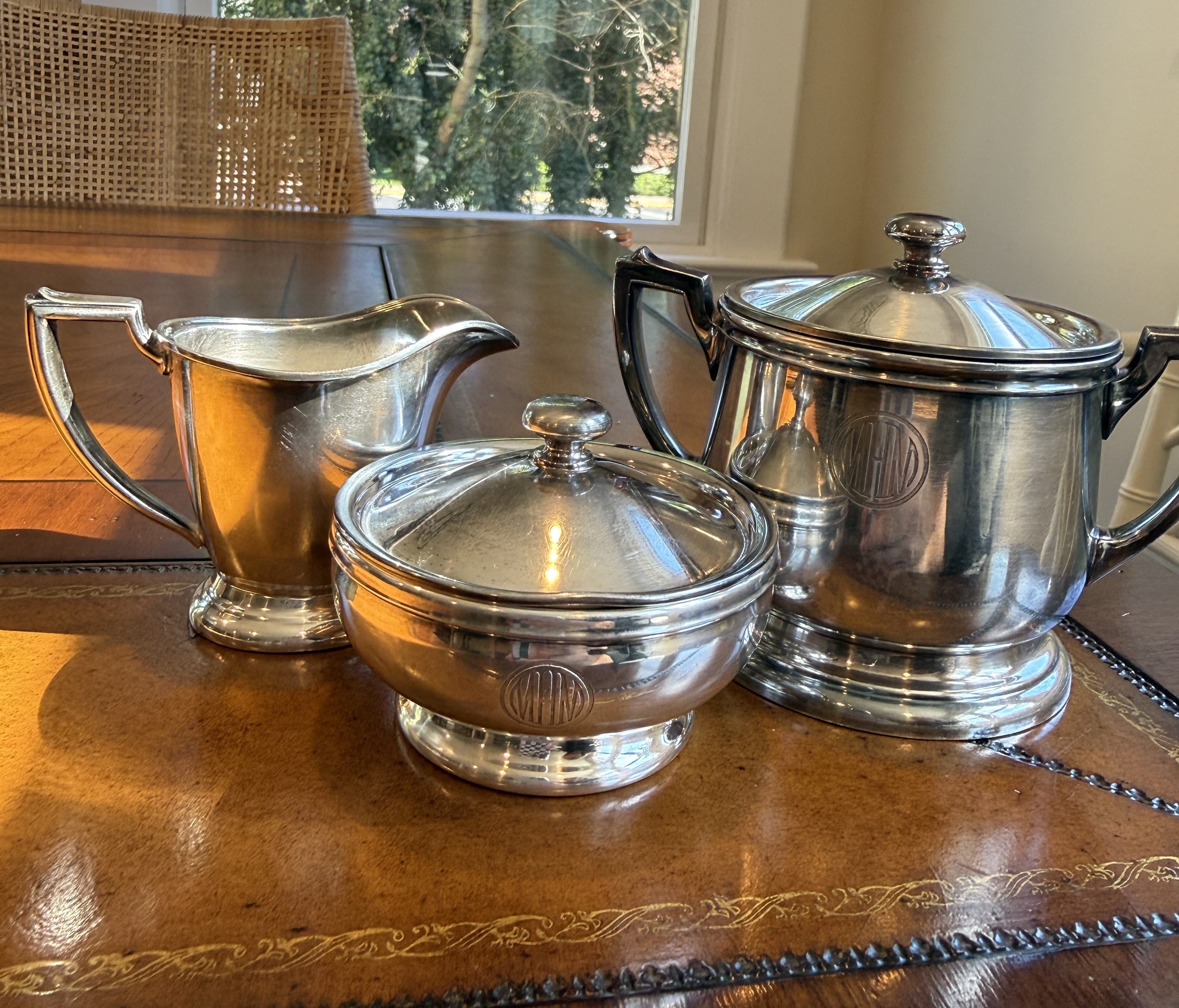
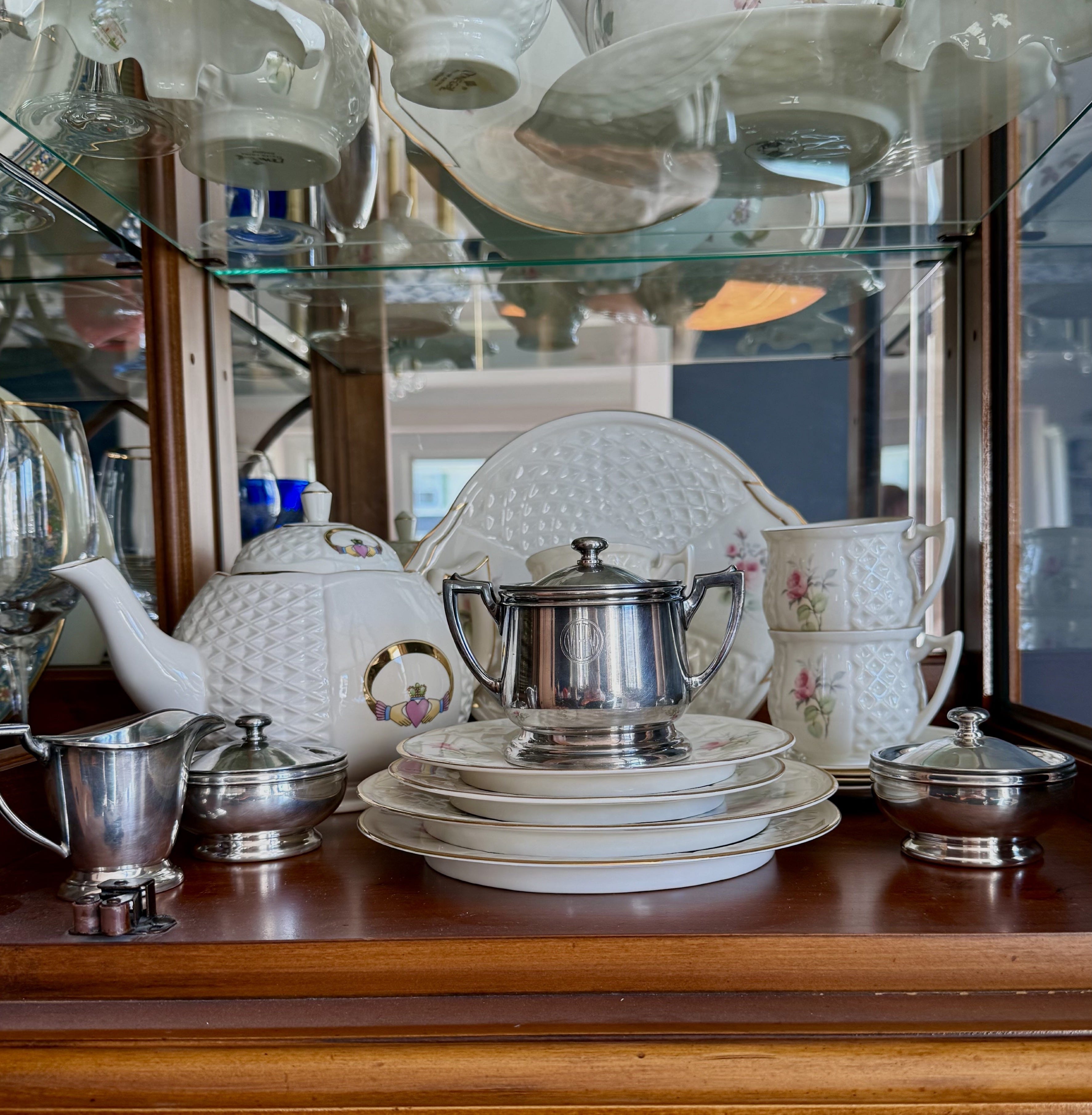
My in-laws gave us a few small silver pieces years ago and I like to display them with my Irish tea sets. I love things that have a story, and these are all monogrammed MHM because they came from Margaret Hague Maternity Hospital in Jersey City, NJ. My husband’s aunt worked there her whole adult life and when it closed in 1979 she was able to bring some of the pieces home.
Of course I was fascinated and did a little research. More than 350,000 babies were born there from 1931 until it closed in 1979. Some notable people are Martha Stewart, who was born there in 1941, and two of Frank and Nancy Barbato Sinatra’s children, who were born there in the 1940s as well.
My pieces are stamped on the bottom that they were produced in 1941 — the same year Martha Stewart was born there! I love to think about the moms who were delivered tea and coffee with these pieces on a tray to their rooms after giving birth to their children. I also chuckle at the changes to our healthcare system, because all I remember is a small plastic pitcher full of ice.


The plate from Virginia — and the one that isn’t silver
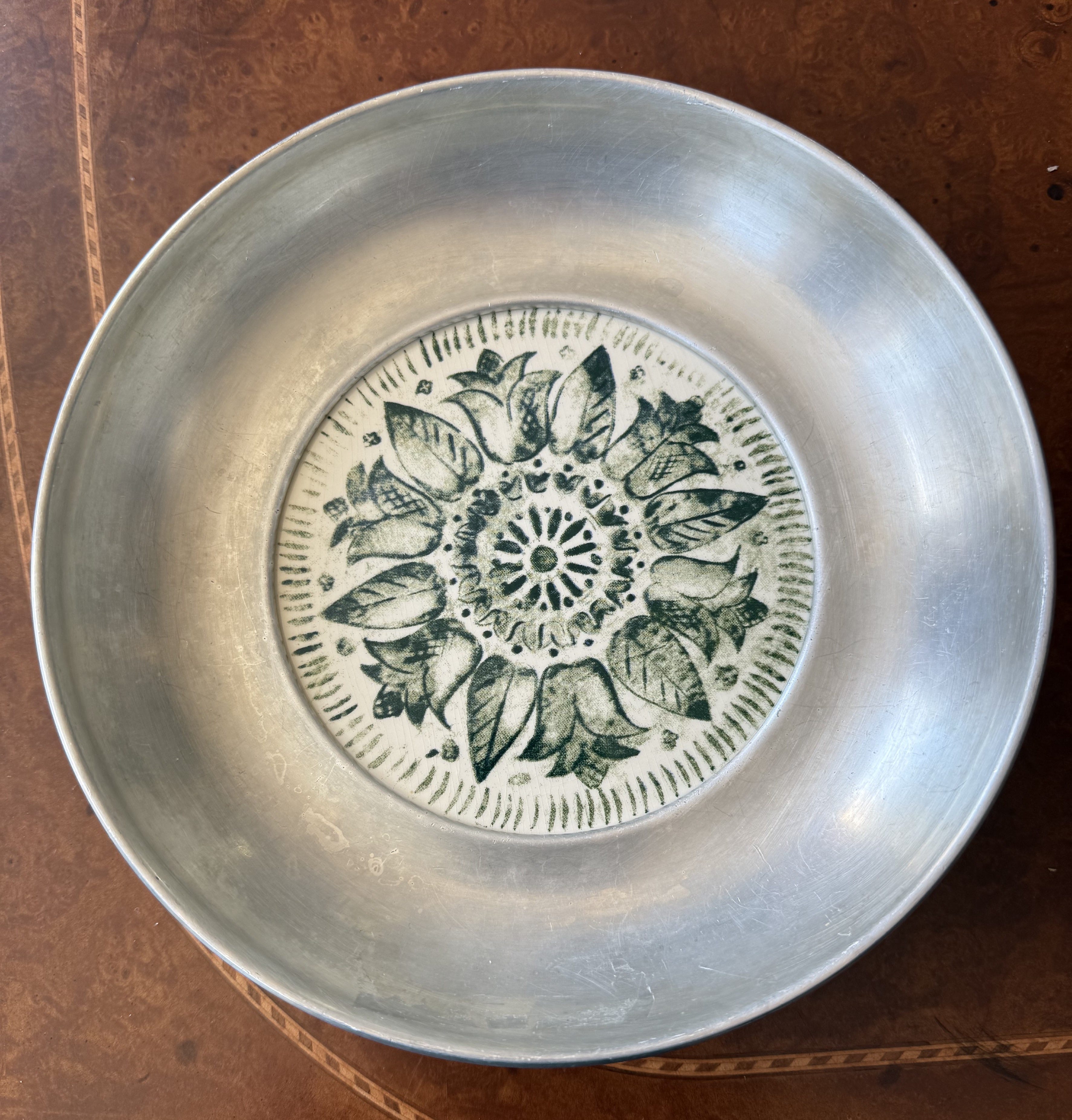
I found this one in an antique store on a road trip through Virginia. I buy old things when I travel instead of souvenirs — a plate, a little dish. Years later I can still tell you which town it came from, which is more than I can say for anything I’ve ever bought in an airport.
It’s a shallow hand-wrought aluminum bowl with a green-and-white ceramic tile set into the middle, the kind of thing American makers turned out by the thousand mid-century. Not worth anything crazy, but I loved the colors that match my kitchen and the unique-to-me combination of metal and ceramic. But aluminum behaves differently from silver, which is worth knowing before you start trying to clean everything you own.
Aluminum doesn’t tarnish the way silver does. Silver goes black because it reacts with sulfur in the air, and that black lifts straight off. Aluminum forms a hard gray oxide layer that is actually protecting the metal underneath, and no polish lifts it the same way — it just evens it out. Mine came up noticeably better and nowhere near a mirror, and that is the ceiling for the material, not a failure of effort.
Which is exactly why you test the back first.
It did no harm to the bowl, and it still looks better than it did. But a two-minute test on the underside would have told me what I was getting before I committed to the whole piece, and that is the single most useful habit in this entire post.
A warning worth more than the shine
Old silver plate is beautiful, but it is usually not tableware. The base metal under the plating can be an alloy containing lead, and once the plating has worn through and you can see gray or pinkish metal, that alloy can leach into whatever is sitting in it — acidic things especially. The people who look after silver professionally say the same thing: if the base metal is showing, stop serving out of it.
What I’m hunting for next and where to look
I love local estate sales (and even Facebook Marketplace) for finding well-priced vintage home decor — that’s where the thirty-dollar bucket came from, and the people pricing a whole house are not silver specialists. Antique stores on road trips are my idea of a good time, and whatever I find doubles as the souvenir. And Etsy is great, when you want something specific and don’t have time for the hunt.
These are one-of-a-kind listings, so what I’m linking is a search rather than a single piece. If something beautiful is sitting there when you look, it may well be gone the following week. That’s the deal with old things.
Small julep cups — they make the prettiest bud vases: one on a bedside table in a guest room, or a row of them straight down the center of a long table. Low arrangements are the best way to set a table when entertaining so everyone can see and chat across from each other.
Footed silver pitchers — the bigger ones are beautiful as vases for a large arrangement, like dried hydrangeas. A pitcher holds a heavy stem better than most vases of the same size because of its weight, and I love the look of a footed one.
Serving trays — they are great for entertaining, but also look pretty on a vanity or dresser holding a perfume collection or your favorite creams.
And if you want your own vintage silver ice bucket, here are some pretty ones.
What to check before you buy: turn it over and read the mark. Look at the high points — rims, handles, feet — for gray or pinkish patches, because that’s plating already worn through. Dents matter far more than tarnish; tarnish is a few minutes and a dent is forever. And lift it. Hotel pieces feel heavier than they look, and that heft is a good sign.
You can’t take it with you
What I always tell people is to use the good stuff. What are you waiting for? You can’t take it with you in the end. Instead of cleaning out a musty museum of tarnished objects, I hope that when the time comes, my kids cherish a few of my finds and always remember the times that we used them around the table or displayed throughout the house, instead of being told not to touch something or finding boxes full of dusty things. So use the good china and put out the silver, even though you will need to polish it every once in a while.
And if you want something worth getting the good dishes out for, the apple crisp that starts fall in our house is here. Pin them both and you're set for the season.
Thanks for being here. Find me on Pinterest and Instagram.
If this was useful, forward it to someone in the thick of it.